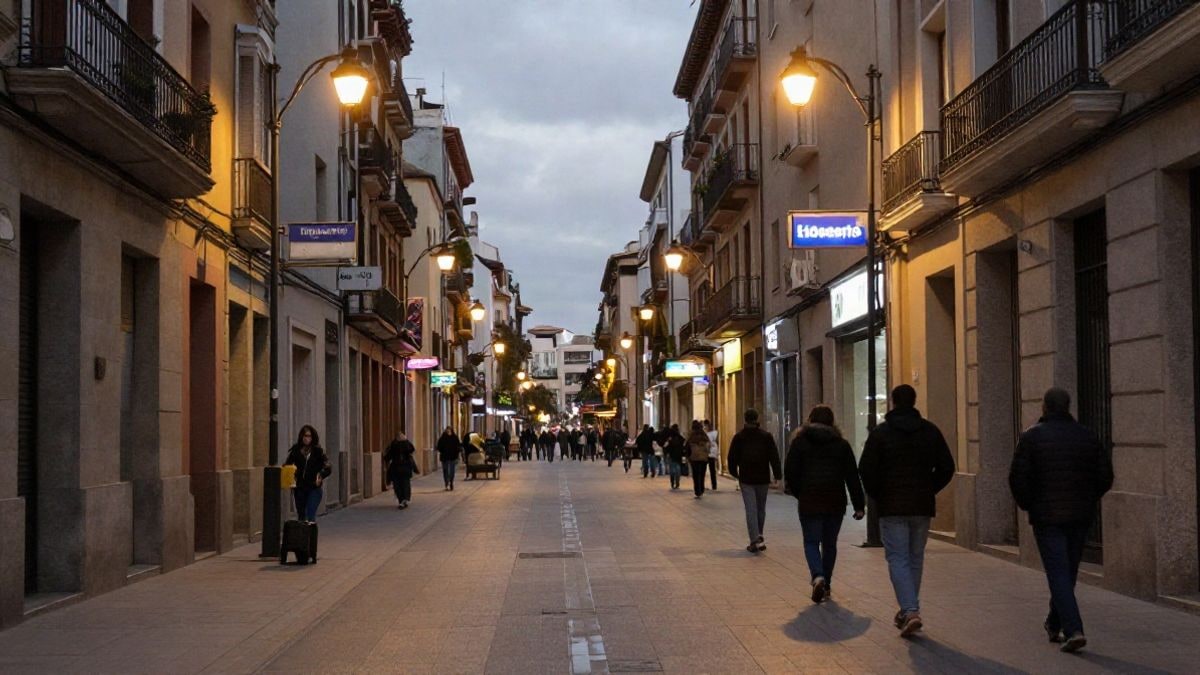
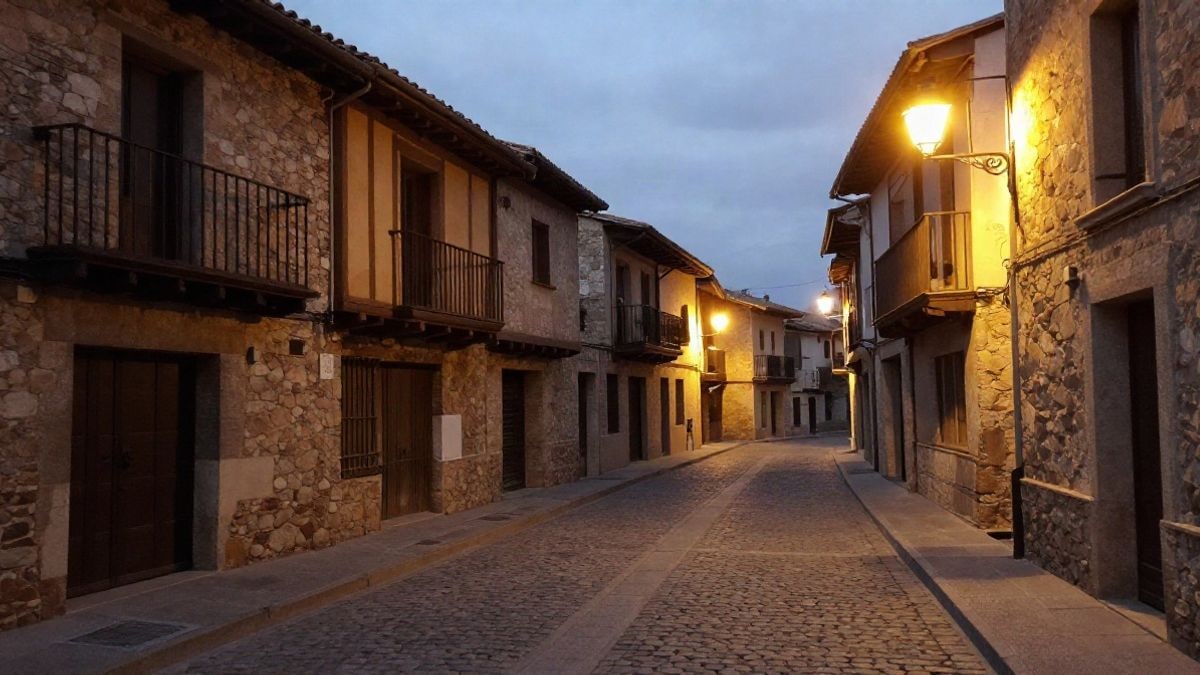
Torrelaguna retains its medieval layout and has been declared a Historical-Artistic Site since 1974. Located 61 kilometres from the capital, it remains off the most crowded tourist routes.
The Community of Madrid has a good number of towns with castles, walls, or porticoed squares that fill with visitors every weekend. Among them is a medieval village that maintains much of its original layout, has been listed in official heritage catalogues since the 1970s, and yet still remains outside the most frequented circuits. It is Torrelaguna, a municipality of just over 5,000 inhabitants located 61 kilometres from Madrid, in the mid-Jarama valley and near the border with Guadalajara, as reported by OK Diario.
Its protection comes via a decree published in the BOE on 23 January 1974, the Decree 3415/1973, of 21 December. The text bears the signature of Francisco Franco and the then Minister of Education and Science, Julio Rodríguez Martínez. The first article declares the village of Torrelaguna a Historical-Artistic Site, with the boundaries marked by a plan annexed to the file, and the second places its guardianship in the hands of the General Directorate of Fine Arts.
The reason is explained a few lines earlier, straightforwardly. According to the decree, the values of the village “must be preserved from reforms or innovations that could harm them,” and that is why it was necessary to place them under state protection. From then on, any work within the defined area ceased to be a private matter and required the approval of heritage authorities.
They must be preserved from reforms or innovations that could harm them
The rationale of the document summarises the local history in a few lines. Torrelaguna acquired its current form in the Middle Ages, as a fortified enclave over the Jarama valley. In 1085, Alfonso VI granted it to the Archbishop of Toledo for his assistance in the capture of Alcalá, and in 1390, it separated from the Toledo see to become a royal village. Later, the walls suffered a definitive blow: the War of Independence destroyed almost all fortifications. The decree recalls that two ancient gates were still distinguishable, one in the plaza de Montalbán and another called the Cristo de Burgos.
Among the elements expressly cited by the BOE are the houses and palatial buildings, such as that of Juan de Salinas, a Renaissance work of which only the façade remains; the popular houses with wooden structures on the streets of Poeta Juan de Mena and Hospital; the church of Santa María Magdalena, promoted by Cardinal Cisneros, with the Christ of Health that Pope Alexander VI gifted to the Catholic Monarchs and the tomb of the poet Juan de Mena; and the Town Hall, a Castilian building with porticoes.
The text of the decree functions almost as a visitor guide and helps to understand what makes this locality in northern Madrid distinct. For the traveller seeking an autumn getaway without crowds, Torrelaguna offers a journey through cobbled streets and civil and religious architecture that the Administration deemed worthy of protection over fifty years ago.
You may also like