The Regional Council of Cultural Heritage approves the declaration as a Heritage Asset in the Monument category. Only the approval of the Government Council of the Community of Madrid is pending.
The Chapel of San Nicasio in Leganés is closer to securing its protection. The Regional Council of Cultural Heritage gave its approval this week for the declaration as a Heritage Asset (BIP) in the Monument category, as reported by La Razón. The final step will be the approval by the Government Council of the Community of Madrid.
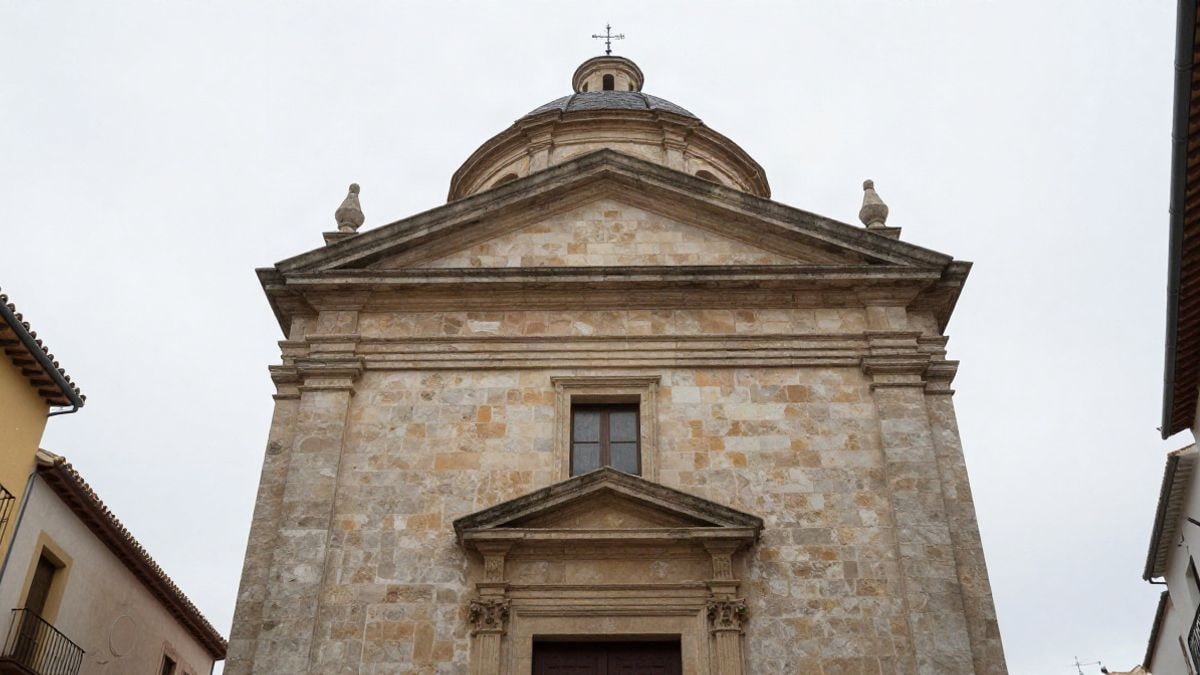
The temple, built between 1775 and 1785, is attributed to Ventura Rodríguez, one of the central figures of 18th-century Spanish architecture. The resolution considers it "very plausible" that the architect not only designed the building but also its main altarpiece, as there is preserved documentation regarding an altarpiece designed by him in 1764.
Among its architectural values, the Greek cross plan, the symmetrical composition of the façades, the porticoes with triangular pediments, the Corinthian order, and the central dome stand out. The file also emphasizes its connection to the history of Leganés: devotion to San Nicasio has been documented in the city since at least the 16th century and is maintained with the patron's festival every October 11.
Inside, contemporary art pieces are preserved, such as the bronze altarpiece by Luis Arencibia and the murals by Manuel Alcorlo depicting the life of the saint. In the sacristy, the brothers Julián and Leandro Rejón are buried, farmers linked to the events of May 2, 1808, and considered key figures in the Leganés rebellion against Napoleonic troops.
Being a Heritage Asset is very important. It is the best way to protect the building, so that certain actions cannot be taken that could somehow damage it," says Eugenio Villarreal to EFE, who retired after more than 40 years at the Leganés Archive.
Villarreal celebrates that, after years of demands from the neighbourhood and its District Board, the regional government has taken this step at the request of the City Council to recognize "its exceptional architectural, historical, artistic, and identity value for Leganés."
Possibly, if it had had this declaration, the buildings that are adjacent would not have been constructed at that time. In some way, this protects it from any work that may want to be carried out, which from now on will require the approval of the Community of Madrid," Villarreal concludes.
The declaration includes a protection environment. Future urban and architectural actions, as well as interventions on public spaces, urban furniture, signage, or advertising elements, must take into account the heritage values of the chapel. The protection will be effective once the Government Council of the Community of Madrid approves the declaration.
You may also like