
Paleontologist Juan Luis Arsuaga claims that humans live surrounded by crowds but are increasingly alone. He stated this at the FLEM festival in Calvià, where he presented his book 'La respuesta'.
The paleontologist and writer Juan Luis Arsuaga (Madrid, 1954) asserted this Sunday that "I see more mass than ever, fewer individuals than ever," an idea he finds difficult to reconcile with the perception that humans are becoming more solitary. He made this statement at a press conference for the Festival de Literatura Expandida Magaluf (FLEM) in Calvià (Mallorca), as reported by infobae.com.
For the professor of Paleontology at the Universidad Complutense de Madrid, the phenomenon of large gatherings is not new: he recalled that the Circo Máximo de Roma already gathered 200,000 people. What he observes now is different because "everything is mass-oriented, more than it has ever been, even the Pope," and he cited concerts by superstars like Shakira or Bad Bunny as examples.
Everyone has signed up for that, for the large gatherings of masses
Arsuaga described himself as a "social individualist" and stated that he feels the need to avoid doing things that are done en masse. Regarding this mass behaviour, he noted that it could have implications for economic and social evolution, although he did not elaborate on the argument.
When asked about artificial intelligence, the communicator expressed his wish for the day when no one asks him about it, just as people no longer ask about landlines. "Just a few days ago, we talked on a landline or put a coin in a phone booth," he pointed out. In contrast, he lamented that no one asks him about the disappearance of physical money: "Where is the money? It's invisible. I haven't paid with coins for years; it's disappeared."
Arsuaga has been part of the research team at Atapuerca since 1982 and has been a co-director of the project since 1991. He scientifically directs the Museo de la Evolución Humana de Burgos and in 2026 published 'La respuesta', a book in which he reflects on what evolution reveals about humans. His previous works include the novel 'Al otro lado de la niebla' (2005) and the essays 'El reloj de Mr. Darwin' (2009), 'Vida, la gran historia' (2019), and 'Nuestro cuerpo. Siete millones de años de evolución' (2023).
Regarding reading, he advocated for it to be recommended for pleasure rather than for its educational benefits. "Why should you read? For pleasure, and if you don't like reading, then don't read; you're missing out," he declared. He also reflected on the value placed on existence: "You've been given a life, what are you complaining about? You're here by chance."
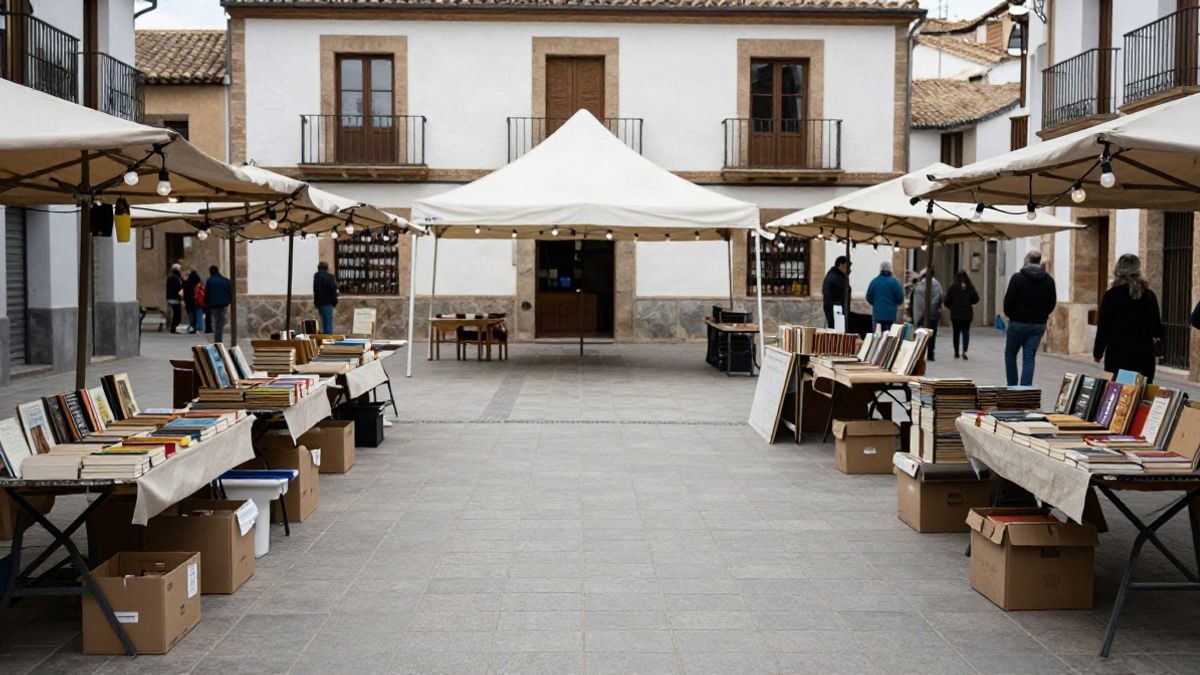
The FLEM is currently taking place in Magaluf, in the Mallorcan municipality of Calvià, featuring a programme of literary meetings and talks with authors.
You may also like