
A team from UAM and UCM has identified four maternal lineages in five individuals buried in El Rebollar. One of them is linked to the Horn of Africa.
According to aulamagna.com.es, the DNA from the human remains found in El Rebollar, in the Madrid municipality of El Boalo, indicates that the individuals buried in this medieval site had diverse origins. A team from the Universidad Autónoma de Madrid (UAM) and the Universidad Complutense de Madrid (UCM) has identified four maternal lineages in five individuals, with one linked to the Horn of Africa.
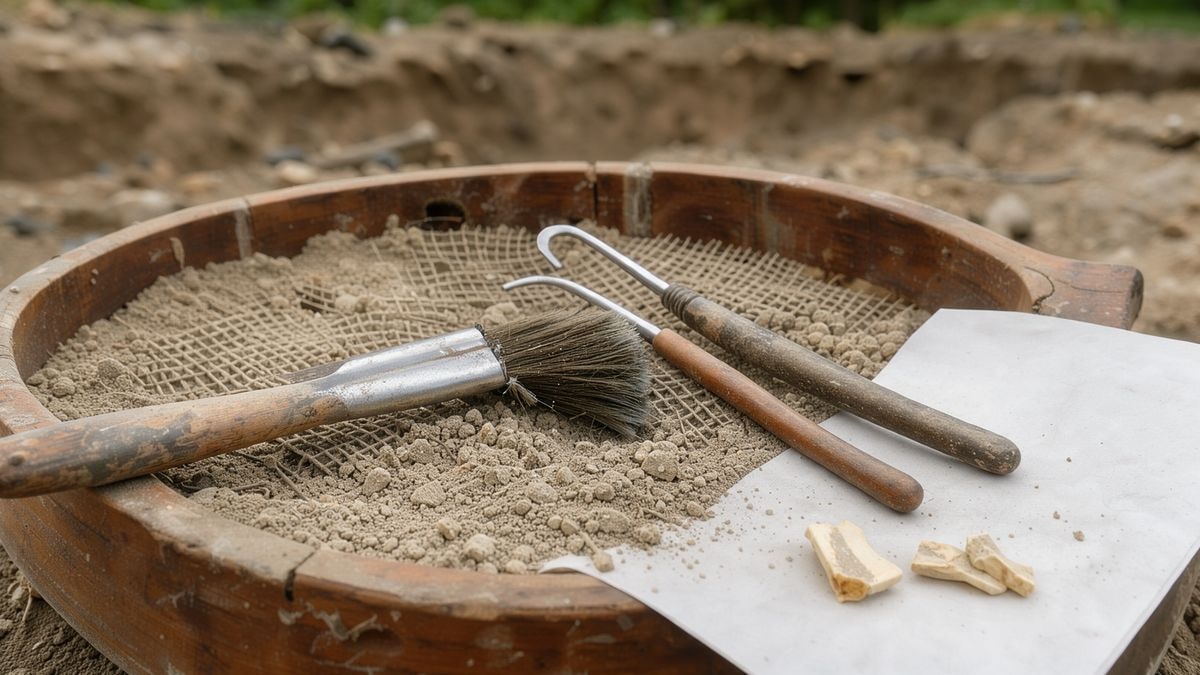
The study, published in the journal Genealogy, combines archaeology, anthropology, and genetics. Excavations began in 2018. The sample includes three individuals from the burials of the Visigothic church and two perinatal remains from the late medieval period, found alongside the church reconstructed over the previous one.
Participating are Javier Salido Domínguez (UAM), who leads the archaeological research; Armando González Martín (UAM), in charge of the anthropological study; and Sara Palomo Díez (UCM), who leads the genetic analysis.
The team analysed mitochondrial DNA, which is passed down only through the maternal line. Therefore, it provides information about a part of each person's family history, specifically their maternal lineage.
The young individual buried in the sarcophagus of grave 4 belongs to the haplogroup L3h2, a lineage currently more prevalent in the Horn of Africa and poorly documented in ancient samples from Western Europe. The study does not determine whether the young man was born in Africa or trace a specific migratory route, although his ancestors may have settled in the Iberian Peninsula several generations earlier.
In the same sarcophagus, an adult male was buried with haplogroup H2a2, which has a broad Eurasian distribution. As they have different lineages, the two men did not share a direct maternal line, although the results do not exclude other familial connections.
In the other sarcophagus, in front of the presbyter, an adult with lineage T1a was found, related to populations from Central and Northeastern Europe. The two perinatal remains from the late medieval phase shared haplogroup HV0, although this coincidence does not prove a close kinship.
The data show the presence of individuals from diverse ancestries and point to the continuity of a substantial part of the Hispano-Roman population. According to the authors, the formation of Visigothic society was a process of mobility and integration among communities of different origins, without a widespread demographic replacement.
The team compared their results with those of 132 individuals from the Iberian Peninsula and other European regions, finding affinities with the group from Pla de l'Horta, in Girona. The authors themselves caution that the conclusions are limited by the small sample size and the fact that only mitochondrial DNA was analysed.
The research has been funded by the General Directorate of Cultural Heritage of the Community of Madrid, UAM, the City Council of El Boalo, Cerceda and Mataelpino, and the Palarq Foundation. The full article can be consulted in the journal Genealogy with the DOI 10.3390/genealogy10040148.
Trending on the web




You may also like