
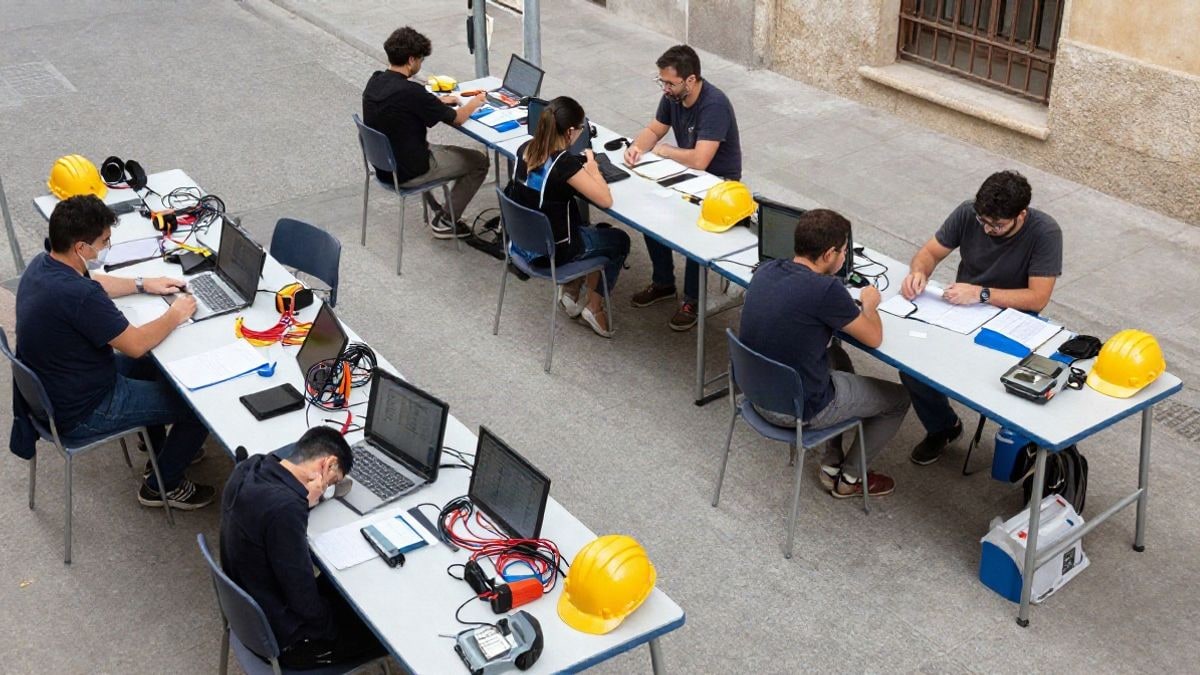
Davante inaugurates a space of more than 800 square meters in Pinto to train the technical profiles demanded by the industry. 82% of companies in the sector acknowledge difficulties in finding talent.
Davante has inaugurated its new Technical Talent Hub in Pinto, a space of over 800 square meters integrated into its Technological Institute. The aim is to align training with the real needs of the industry, according to the organization, in information reported by pressdigital.es.
The hub combines practical learning, technology, certifications, and direct collaboration with companies to train and update the technical profiles demanded by the job market. It specializes in areas such as industrial maintenance and automation, electricity, renewable energies, climate control and installations, automotive, production and logistics, as well as professional licenses and certifications.
The inauguration addresses a problem affecting the whole of Spain and also the Community of Madrid. According to the 'Talent Mismatch 2026' report by ManpowerGroup, 78% of Spanish companies acknowledge having difficulties in finding the talent they need, a percentage that reaches 82% in the industrial sector.
To this difficulty is added the generational change. The Spanish industry will need to fill more than 1.5 million jobs by 2035 due to the retirement of currently active professionals, according to the study 'Vocational Training and Generational Change in the Spanish Industry', prepared by CaixaBank Dualiza and Orkestra.
The SEPE, in its report 'The Adjustment of Job Supply and Demand 2026', recorded a total of 95,340 vacancies in Spain in the fourth quarter of 2025, of which 43,495 remained unfilled after 90 days or more. Among the most affected occupations are welders and sheet metal workers, mechanics and machine adjusters, machine tool operators, and electricians.
In the Community of Madrid, the 'Labour Market Report 2026' from SEPE also indicates mismatches in profiles such as electricians, plumbers, welders, and climate control mechanics, mainly due to a lack of applications and deficiencies in technical training.
The CEO of Davante, Gianpaolo Santorsola, explained the purpose of the project:
Today we are not just inaugurating a new space but responding to a need that companies know very well, that we need more technical talent and we need it prepared for a reality that changes every day.
Santorsola added that “technical talent does not appear by chance” and that “it must be discovered, trained, and connected with companies.”
The first deputy mayor of Pinto, Francisco José Pérez García, stated that the responsibility of the City Council is twofold: “to ensure that projects like this take root and to help training reach those who need it most.”
The hub has the collaboration of companies such as ABB, Bosch Rexroth, Ferrovial, Ferroli, Festo, Haier, Legrand, Siemens, Simon, and Universal Robots. The purpose is to keep training connected with the technologies and skills currently used in work environments.
The Davante Technological Institute trained around 14,000 people over the last year, nearly 6,000 of whom were in electricity. The new Hub in Pinto expands this model with an offer that combines Vocational Training, technical courses, certifications, and programs designed alongside companies.
The initiative also aims to broaden the base of people accessing these trades. Currently, women represent only 12.6% of qualified trades professionals in the industry, according to Randstad Research.
You may also like


