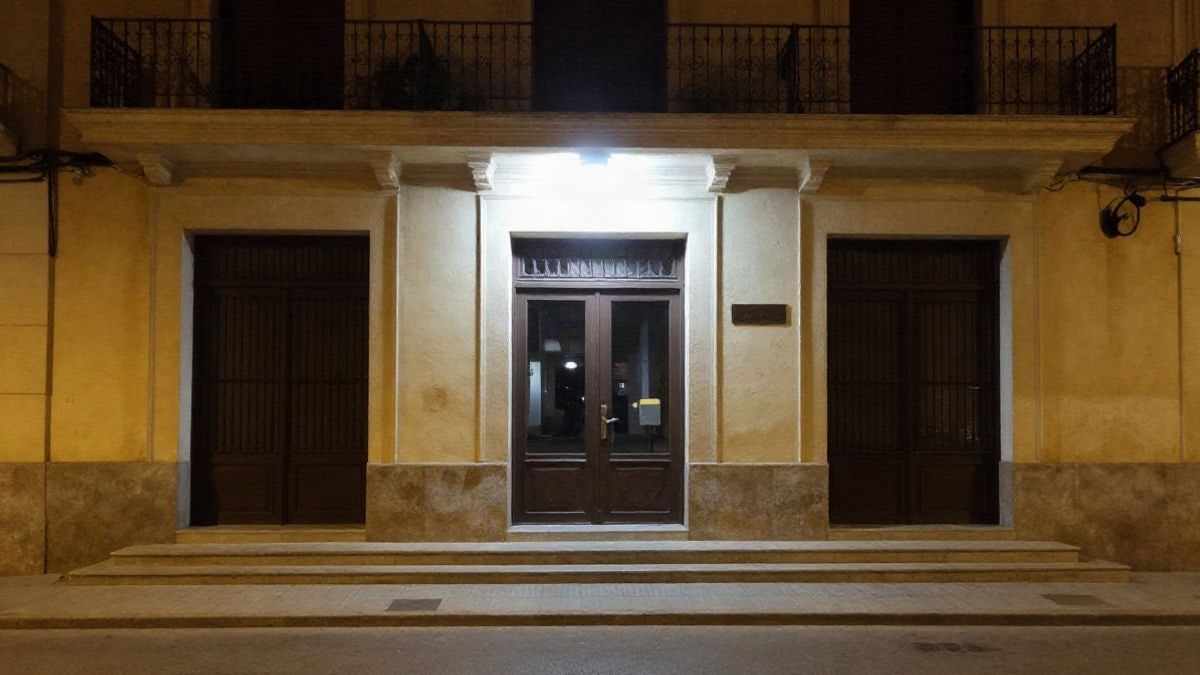

A day at the headquarters of the Official College of Psychology of Madrid examines how misinformation polarises society and erodes trust in institutions. Experts in psychology and verification call for studying the phenomenon to design effective interventions.
Misinformation and fake news are no longer marginal phenomena: they circulate rapidly through social media and digital channels, and their impact goes beyond the mere dissemination of misleading information. This was concluded during the event 'Misinformation, Fake News and Coexistence: A Psychological Perspective', held at the headquarters of the Official College of Psychology of Madrid and framed within the 'Psychology that Transforms' project, as reported by servimedia.es.
The meeting, organised by the 'Psychology and Coexistence' and 'Psychology, AI and Innovation' areas, brought together specialists in psychology, verification, and data analysis to address how contexts of misinformation polarise the population and affect coexistence. The opening was led by Noelia Morán, coordinator of 'Coexistence', and Lucía Halty, from 'AI and Innovation'.
There are no precedents; misinformation, fake news, and manipulated content are no longer marginal phenomena,” Morán stated.
Halty recalled that another event on cognitive warfare was held last March as part of the same project, “which is a precursor to this. Now we want to take a step further by discussing the concept of misinformation,” she concluded.
Journalist Carla Pina, director of INFOVERITAS, a media outlet specialising in verification and fact-checking, delivered the presentation 'Democracy Under the Algorithm: How Misinformation Harms Coexistence'. Pina warned that lies about migration, gender, and other deceptions designed to destroy coexistence circulate daily on social media, seeking to ignite anger, fuel fear, and divide society. During her talk, she offered guidelines for detecting false content: check the source, verify the publication date, distrust sensationalist messages, and analyse whether the content evokes emotions such as fear or anger.
Manipulated messages stigmatise minorities, incite hatred, divide citizens, and weaken the democratic system,” Pina pointed out.
The professor of Psychology at Complutense University of Madrid, M.ª Paz García-Vera, addressed in her talk 'Know Your Enemy and Know Your Weaknesses: First Steps to Combat Misinformation' how cognitive shortcuts that save time and energy in decision-making also increase vulnerability to influence and persuasion. This vulnerability, she added, “can be exacerbated when messages are personalised, using our characteristics. This, with new technologies, is easier than we think.”
Meanwhile, David Aguado, a professor at the Faculty of Psychology of Autonomous University of Madrid, presented a study developed by the team at the Institute of Knowledge Engineering to analyse the individual determinants of vulnerability to misinformation. The results showed the weight of certain psychosocial characteristics beyond the ability to identify false content.
Vulnerability to social influence plays a very relevant role in explaining the behaviour of disseminating information uncritically,” Aguado added.
Rocío Lana, from the Department of Social, Work and Differential Psychology at the Faculty of Psychology of Complutense University of Madrid, intervened with the presentation 'Proposals for Psychosocial Intervention in Contexts of Misinformation and Fake News'. Lana emphasised that fake news generates consequences such as polarisation, instability, and a decrease in trust in institutions.
To combat them and generate effective interventions for citizens, we need to study these problems in depth,” she elaborated.
The dean of the College, Timanfaya Hernández, highlighted during the closing remarks the problem that fake news poses for coexistence. “We have a profession with the capacity to explain and to be there where it is truly needed,” she emphasised.
Among the conclusions of the meeting, participants agreed that misinformation harms social cohesion, erodes trust in institutions, and polarises society, and called for more research to design effective interventions.
You may also like