
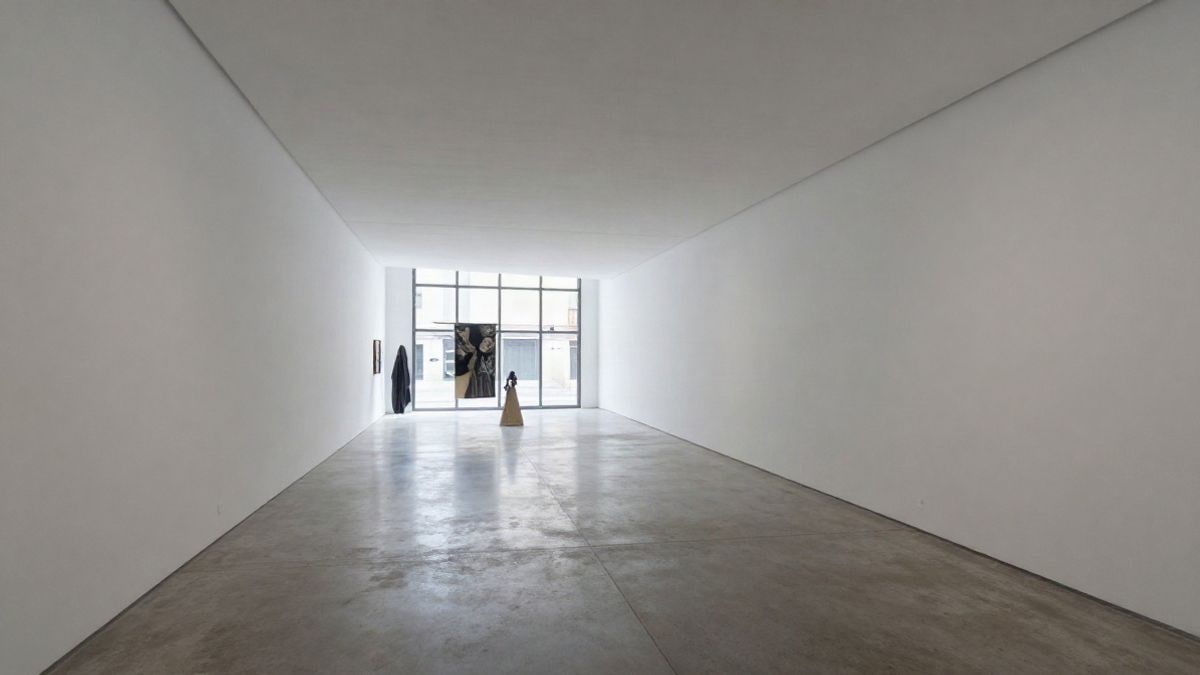
The exhibition 'Continents as Seeds' brings together La Chola Poblete, Niño de Elche, and Pedro G. Romero at La Casa Encendida to trace the traces of colonialism in flamenco, bodies, and everyday objects. It will be open until January 10, 2027.
La Casa Encendida in Madrid hosts this month the exhibition 'Continents as Seeds', a project that intertwines sound, sculpture, drawing, and performance to interrogate the scars of colonialism. The exhibition, curated by Manuela Moscoso, executive and artistic director of the Centre for Art, Research and Alliances (CARA) in New York, brings together La Chola Poblete, Niño de Elche, and Pedro G. Romero and will be open until January 10, 2027, as reported by larazon.es.
The journey begins with objects and symbols that have travelled between continents: Manila shawls, the Virgin, Pachamama, Che Guevara, or a bottle of Quilmes beer. All of these serve to examine the processes of appropriation, erasure, and transformation that have shaped identities and imaginaries on both sides of the ocean.
Niño de Elche and Pedro G. Romero present 'Sadopítna, or rather, antipodes, turned upside down and backwards' (2023), a musical and performative research project on the transnational histories of flamenco and its links to colonial trade routes. The collaboration references the Galleon of Manila, the network of exchanges that connected Asia, America, and Europe between 1565 and 1815.
Their songs traverse the connections woven between Spain, Mexico, Thailand, the Philippines, Japan, Indonesia, Aotearoa (New Zealand), and Samoa. One of the main threads of this sound map is the Manila shawls, garments produced in China, traded in America, reinterpreted in Mexico and the Philippines, and later incorporated into the flamenco imaginary until they became symbols of Spanish culture.
In contrast to this journey through the routes of colonial trade, La Chola Poblete focuses on the body as a territory traversed by this historical logic and, at the same time, as a space of resistance. In her drawings, matriarchal characters like the Virgin and Pachamama coexist with trans subjectivities, revolutionary icons like Che Guevara, and commercial symbols like the logo of the Argentine beer Quilmes.
Her language, rooted in mestizo and indigenous knowledge, honours these spiritual and cultural figures, but also points out their appropriation and abuse by colonial powers. Through parody and irreverence, Poblete questions how bodies should behave under the systems of capitalism and patriarchy.
The exhibition thus addresses the contradictions between nationalism, religion, and consumerism, as well as questioning the fetishism of commodities. The title 'Continents as Seeds' refers to the writer and activist June Jordan (1936-2002) and to some verses from her work 'Who Look at Me' (1969):
New energies of darkness we / disturb a continent / like seeds
The exhibition can be visited at La Casa Encendida in Madrid until January 10, 2027.
You may also like


