
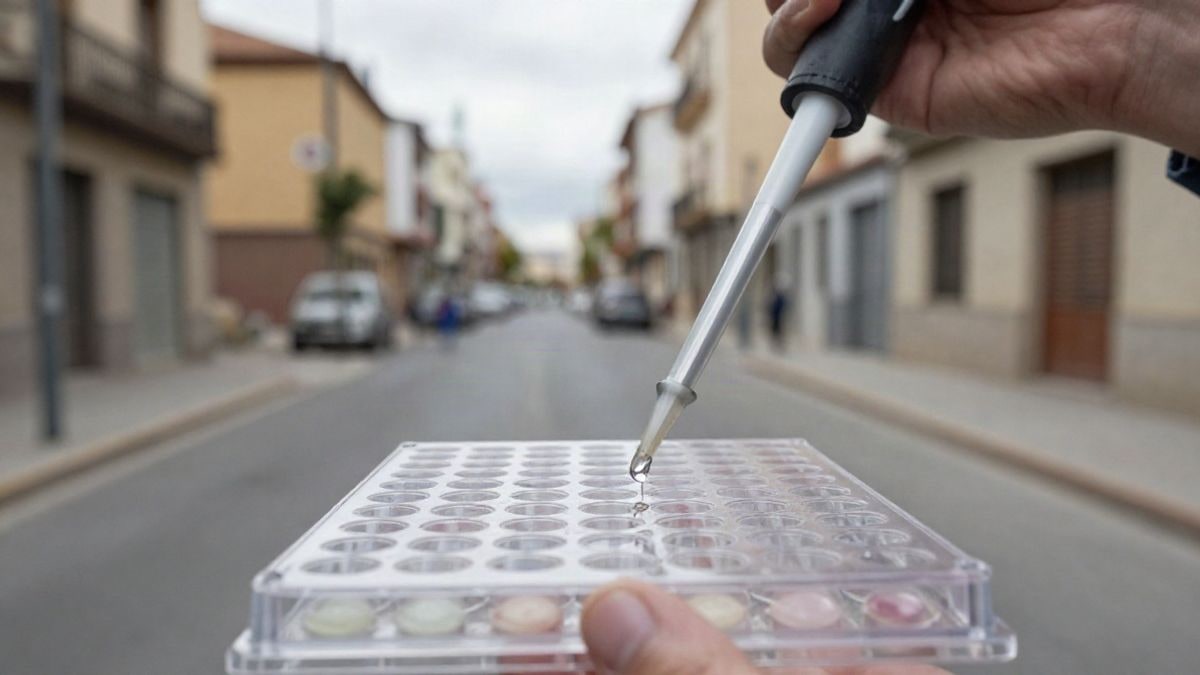
A study coordinated by Complutense University of Madrid identifies a mechanism to halt the spread of breast cancer by acting on the RAC1 protein without completely blocking it.
A research team coordinated by Complutense University of Madrid (UCM) has identified a mechanism that could stop breast cancer from spreading to other organs. The work, published in the journal Signal Transduction and Targeted Therapy, was led by Sonia Castillo-Lluva, a researcher in the Department of Biochemistry and Molecular Biology at the Faculty of Chemical Sciences of UCM, as reported by diarioestrategia.cl.
The finding focuses on RAC1, a protein that acts as a molecular switch within cells and participates in processes such as growth, movement, and shape changes. Tumour cells exploit these same functions to move, invade nearby tissues, and reach other organs.
Completely blocking RAC1 is not a viable strategy, as the protein also performs important functions in normal cells. The researchers worked with experimental models in which they prevented RAC1 from receiving a specific modification, SUMOylation. By blocking it, the occurrence of metastasis in the lungs drastically decreased, while the growth of the primary tumour barely changed.
The study also describes how RAC1 promotes invasion. The SUMOylation of the protein drives the formation of invadopodia, structures rich in actin that function as molecular drills: they degrade the extracellular matrix surrounding the tumour and pave the way for tumour cells to other tissues.
When SUMOylation of RAC1 was blocked, the occurrence of metastasis in the lungs drastically decreased, while the growth of the primary tumour barely changed
The experiments employed the peptide TAT-PRASI, which reduced the ability of breast cancer cells to move and invade other tissues and decreased metastatic spread. The peptide also reduced the invasive capacity of organoids from breast cancer patients with HER2+ tumours.
The results were observed in cell lines from different molecular subtypes of breast cancer, suggesting that the mechanism could be of interest beyond a single type of tumour. The research proposes a possible therapeutic strategy: not to eliminate RAC1, but to selectively interfere with the protein's functions related to metastasis.
The authors caution that these are experimental results and that further studies will be necessary before determining whether this strategy can become a treatment for patients.
You may also like