The Painting and Architecture Museums of the Monastery of San Lorenzo de El Escorial will reopen this Friday, October 2, after a decade closed. Entry will be free until December 31, 2026.
The Painting and Architecture Museums of the Monastery of San Lorenzo de El Escorial are reopening their doors this Friday October 2 after ten years closed. Entry will be free until December 31, 2026, as announced by the president of Patrimonio Nacional, Ana de la Cueva, at a press conference held this Thursday at the monastery itself, as reported by diariosigloxxi.com.
Patrimonio Nacional has invested 3.1 million euros in the intervention, a budget primarily sourced from European funds NextGenerationEU.
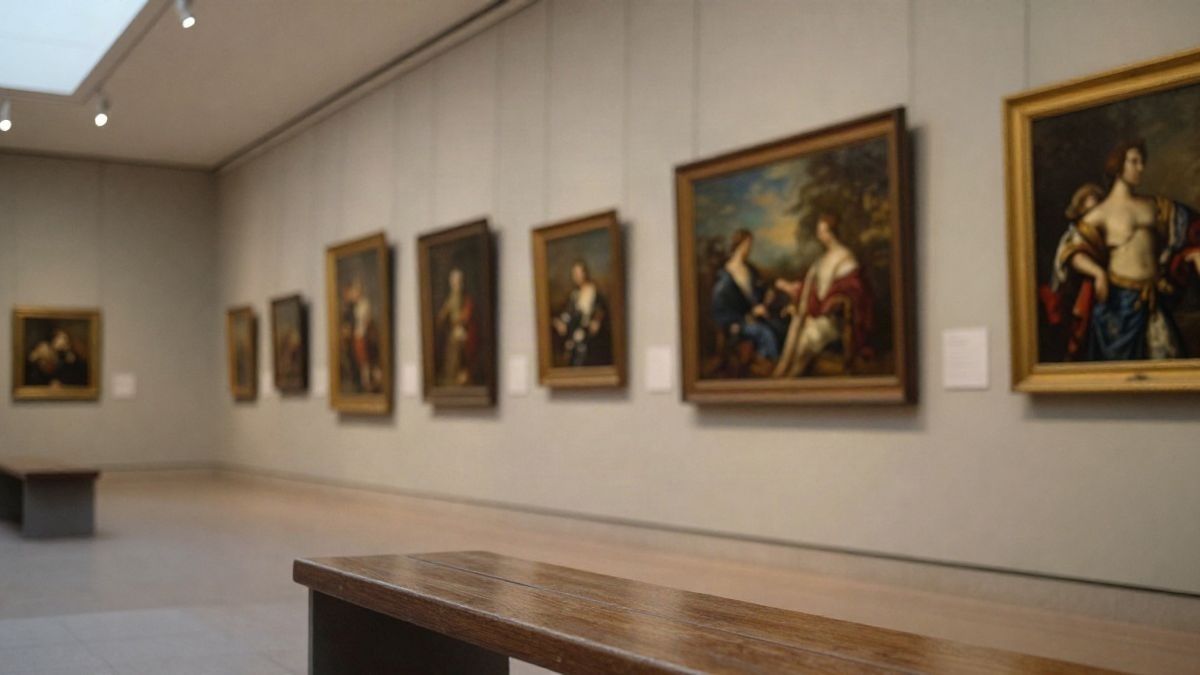
The Painting Museum exhibits around a hundred works from the Italian, Flemish, and Spanish schools. Among the artists are Tiziano, Tintoretto, Cambiaso, Veronés, Van der Weyden, Giordano, Ribera, Madrazo, Carvajal, and Coxcie. Of this hundred, 21 pieces are being displayed permanently for the first time. Some were in storage, palace offices, or even in Madrid, as explained by the director of the Royal Collections, Víctor Cageao.
Nearly a third of the exhibited works have been restored for the occasion, including two pieces by Luca Cambiaso. Cageao clarified that the museum does not house works created by women "identified as such," although he did not rule out that there may be some among the anonymous or those signed by workshops where women worked.
There is still research to be done," Cageao defended.
Among the highlighted pieces are the diptych of the Alegoría de la Redención, by Michiel Coxcie; the Calvario by Rogier van der Weyden; and Santa Margarita de Antioquía, by Tiziano. All belong to the collections of Philip II, Philip IV, Charles II, Charles IV, and Isabel II.
The Architecture Museum, conceived by Javier Feduchi and Jesús Bosh, incorporates a new exhibition narrative with plans, engravings, models, tools, and audiovisual resources about the construction of the monastery. The tour pays attention to Juan Bautista de Toledo, author of the initial designs, and Juan de Herrera, responsible for the architectural development.
The intervention has added one of the Honor Halls to the itinerary, where original elements from the Holy Week Monument designed by Juan de Herrera are exhibited, and has restored an old palace kitchen as a resting space with historical fireplaces and kitchenware.
The director of Real Estate and Natural Environment, Luis Pérez de Prada, noted that more than 1,000 people were involved in the construction of the monument, trades that are explained in the museum.
The Monastery is, in itself, the main piece of the Architecture Museum," Pérez de Prada explained.
The Painting Museum occupies the former Summer Palace of Philip II, while the Architecture Museum is located in the Vaults Floor, rehabilitated by Ramón Andrada. Both spaces originated from the museums created in 1963 to mark the fourth centenary of the laying of the first stone of the Monastery.
Starting from January 1, 2027, access to the museums will require a specific ticket or the general ticket for the Royal Monastery.
You may also like